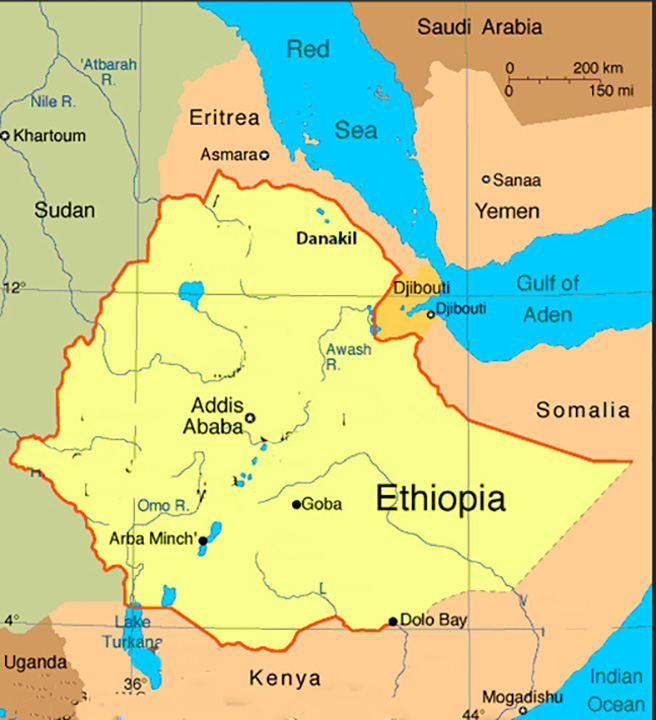
A month after completing my 193 UN countries, it’s time for the MTP (Most Traveled People) Summit II, this one is Addis Ababa, a very modern city that is the capital of Ethiopia. Also in attendence are some 200+ adventure travelers including 40+ fellow UN grand masters.
|
|
|
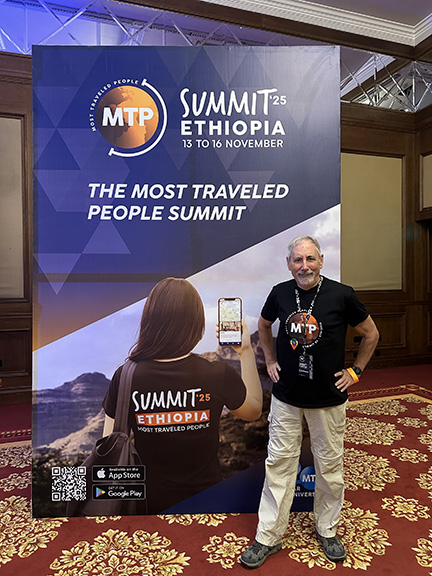
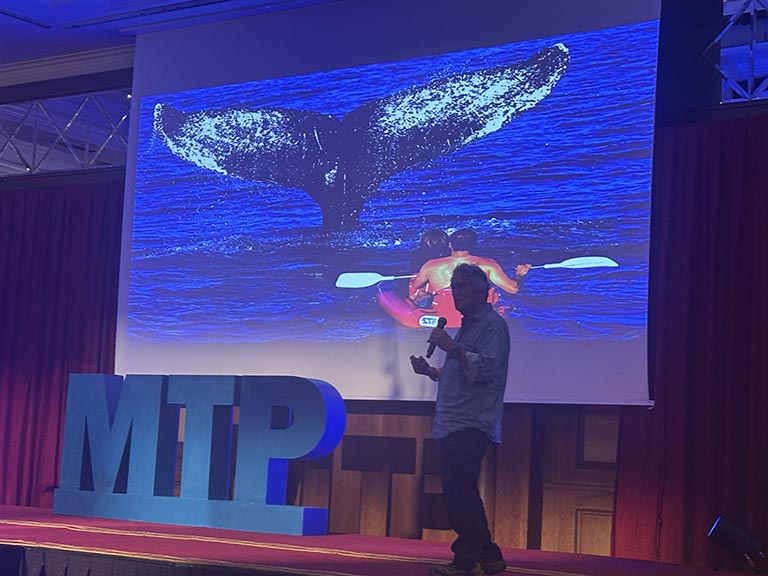
Here, I am but a tyro: one speaker has been to all 193, both the North and South Poles, and outer space. Another has summited the highest mountain in all seven continents, run the North Pole Marathon, and rowed across the Atlantic. Stories from the world's most acclaimed marine photographer. Three days of impressive and inspirational presentations.
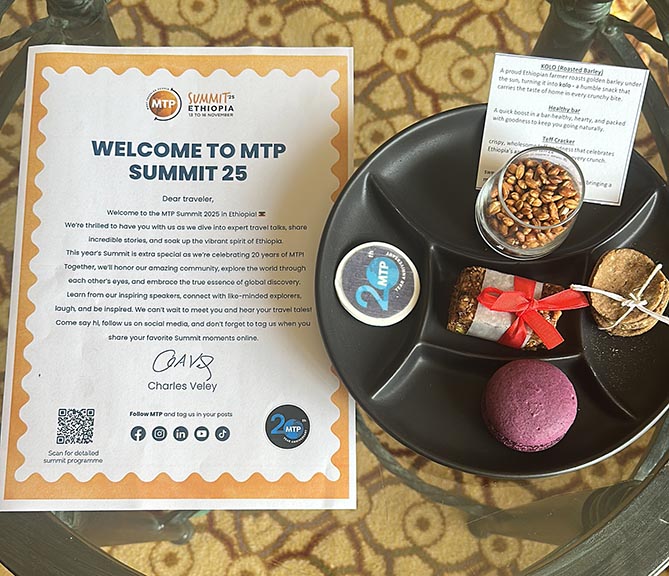
It’s also recognition and reward time: in addition to donning the world’s most expensive T-shirt, I get a handsome certificate and a lovely inscribed globe.
|
|
|
|
|



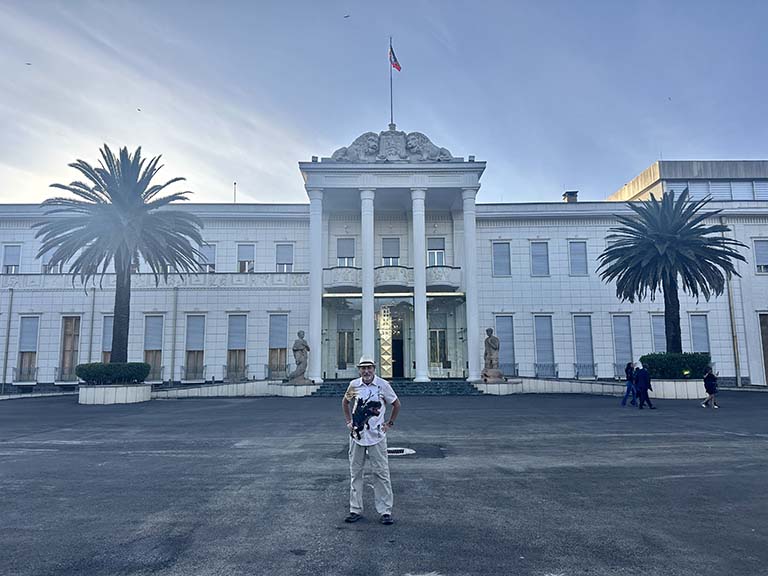
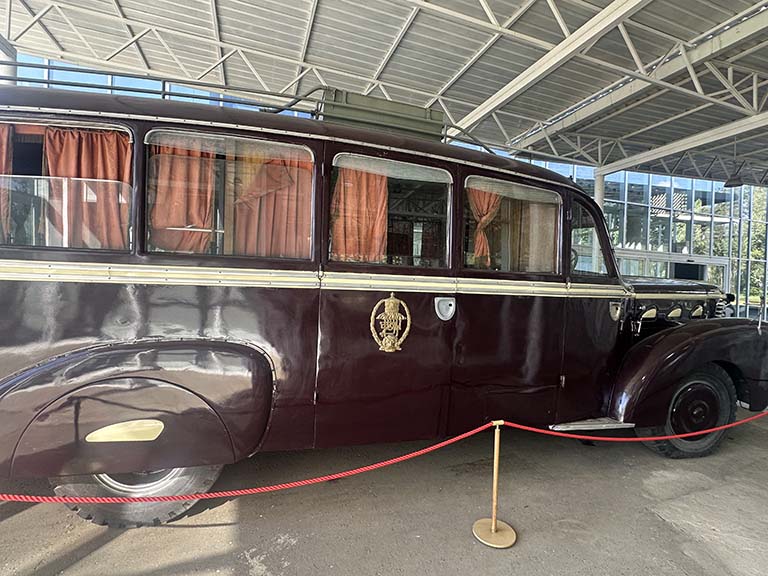
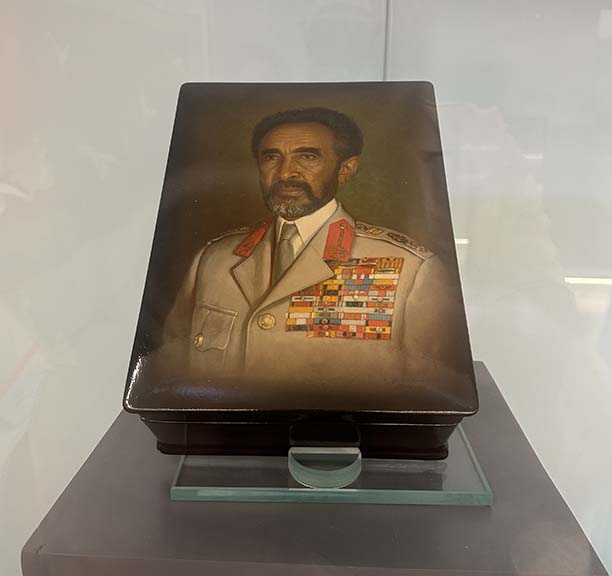
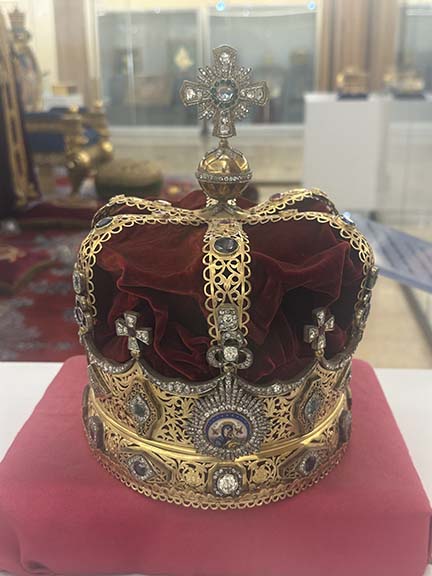
Close to the conference hotel is the former palace of Haile Selassie, the last Emperor of Ethiopia, who claimed to be a direct descendant of King Solomon. He was overthrown and the monarchy ended in 1974. The edifice has been recently restored and renamed the National Palace. On display are his automotive collection, royal regalia, and various tchotchkes.
|
|
|
|
|
|
There are also trips before and after the conference. I signed up for a visit to Mogadishu in sunny Somalia just prior; unfortunately, the airline chaos resulting from the government shutdown caused a cancellation of my connecting flight to New York, causing me to miss my intermediate flight to Istanbul and following flight to Mogadishu. The next flight combination was not for three days, nor would switching airlines have helped. With a heavy heart but no choice, I scrubbed the pre-trip and rerouted directly to Addis.
But the post-trip to southern Ethiopia is still on. Never mind that the Marburg virus (a close cousin of Ebola) has erupted in Jinka, we will deal with that later.
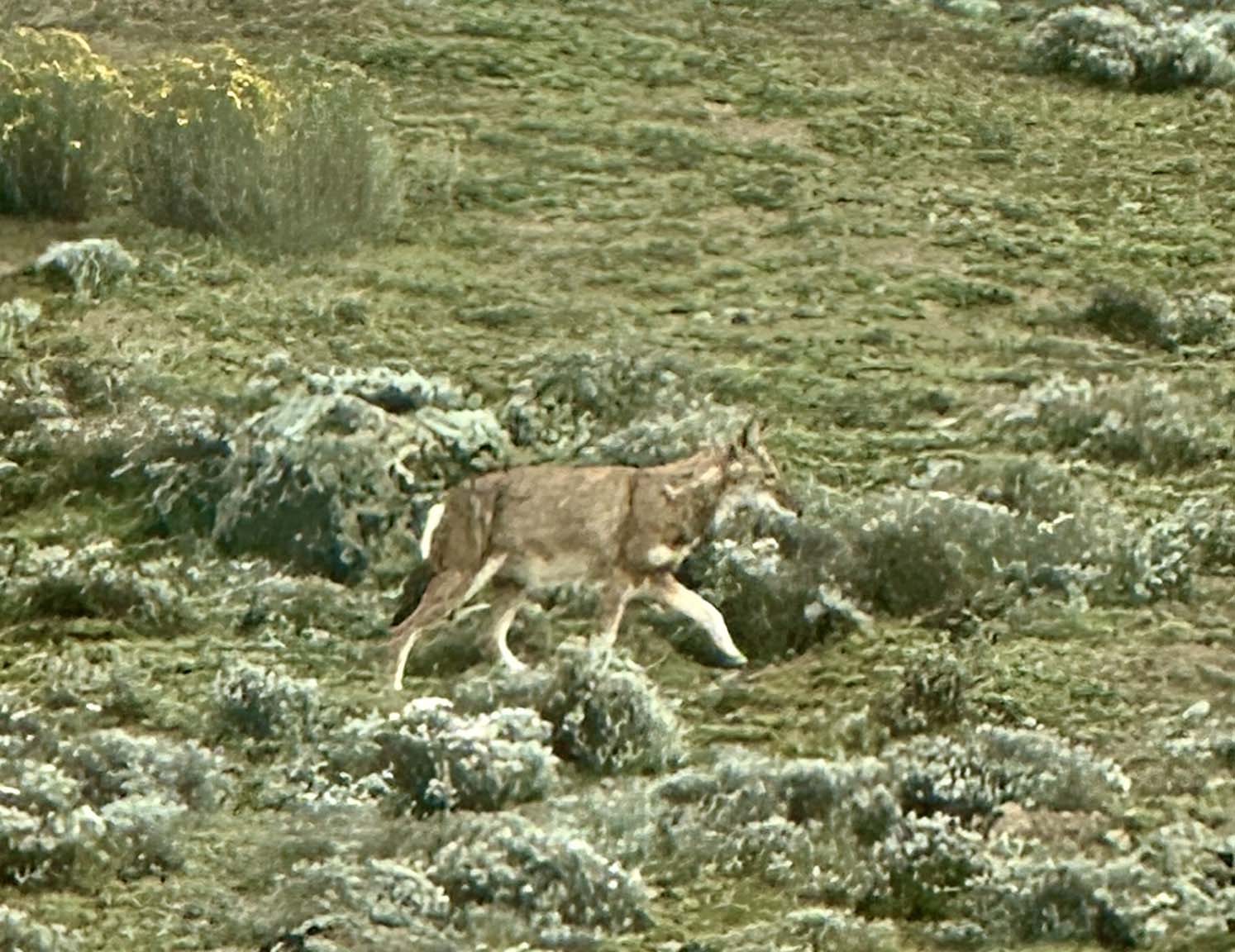
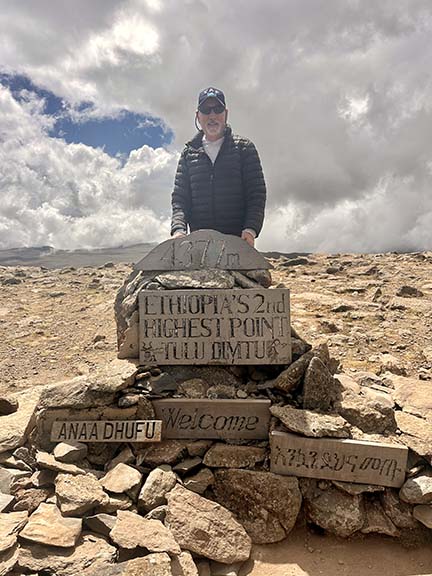
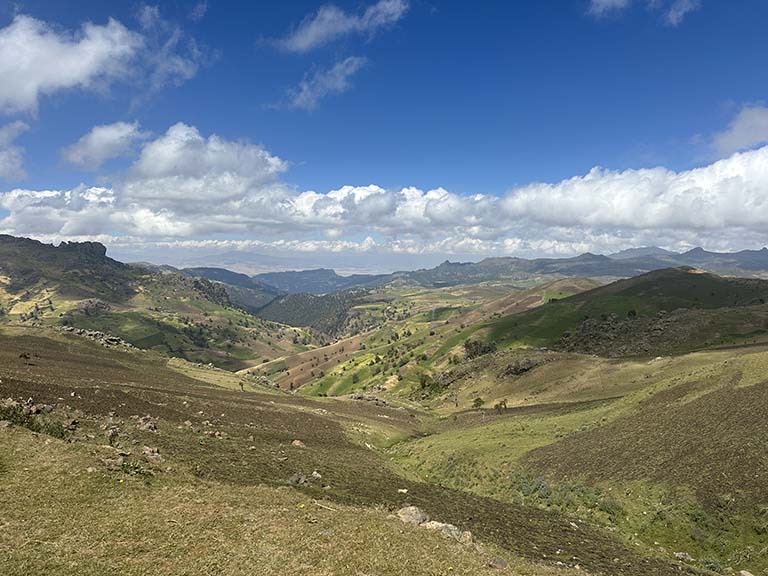
The flight time to Goba is an hour. Up here at 14,000 feet it’s freezing despite being only six degree north of the equator. The Bale Mountains National Park is the sole range of the highly endangered Abyssinian wolf, of which we get a distant view of several. Otherwise, it is pretty much ordinary mountain scenery and vistas.
|
|
|
|
|
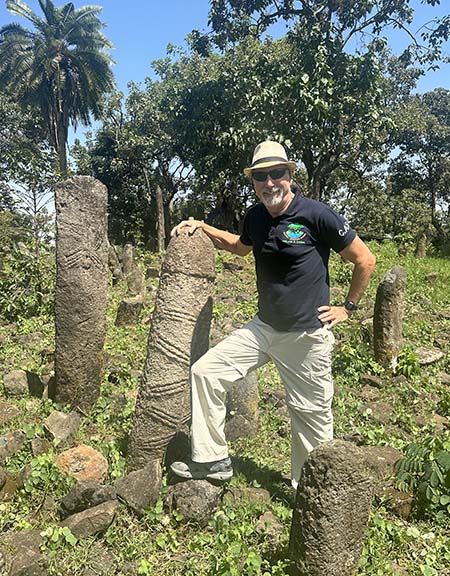
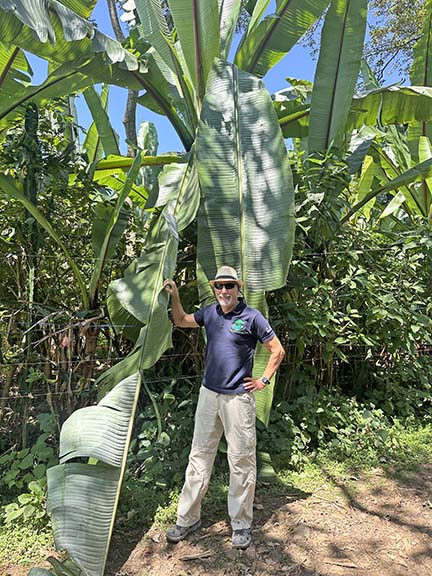
A long drive brings us to the Tutu Fela Mysterious Archelogical Site for its funery stelae. Its megalithic phallic grave markers, part of the Gedeo Cultural Landscape, are more significant than interesting. To me, the large banana leaves nearby almost as noteworthy.
|
|
|
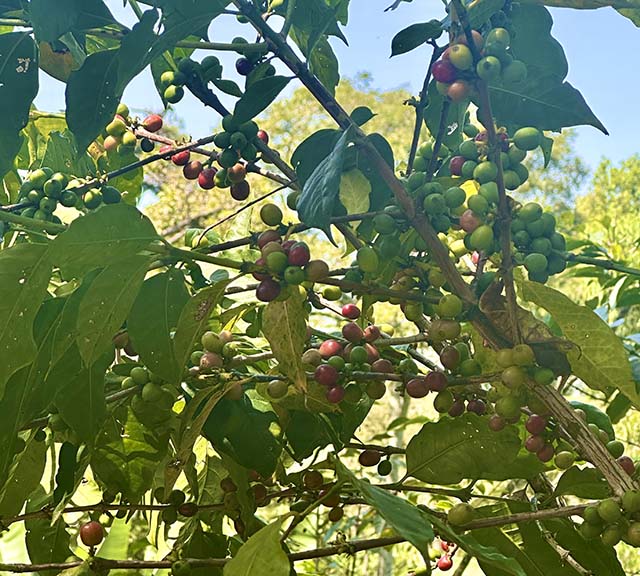
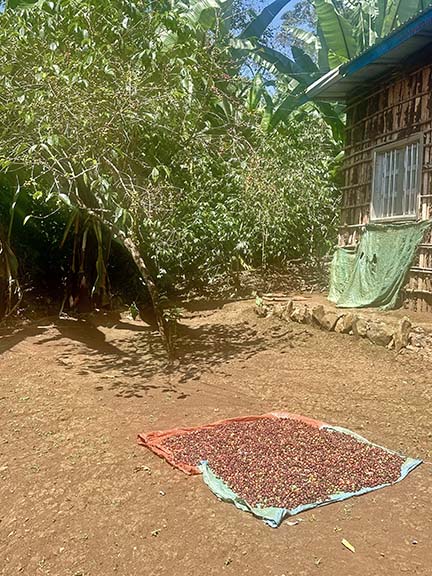
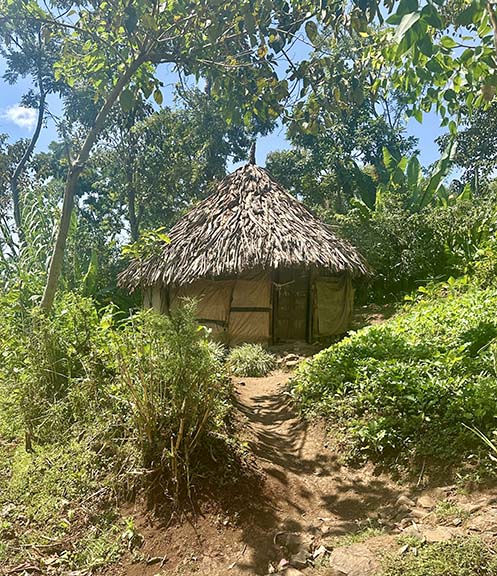
There is a coffee-growing village nearby.
|
|
|
|
|
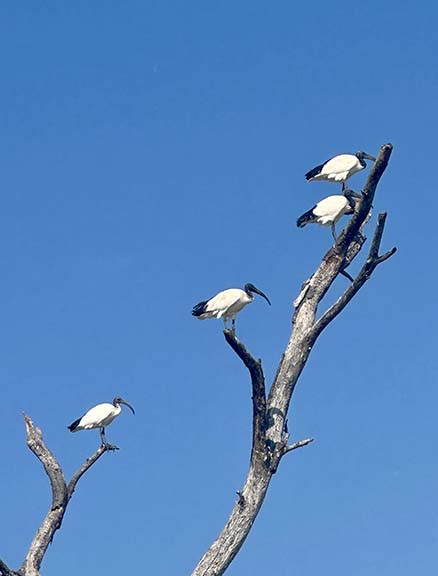
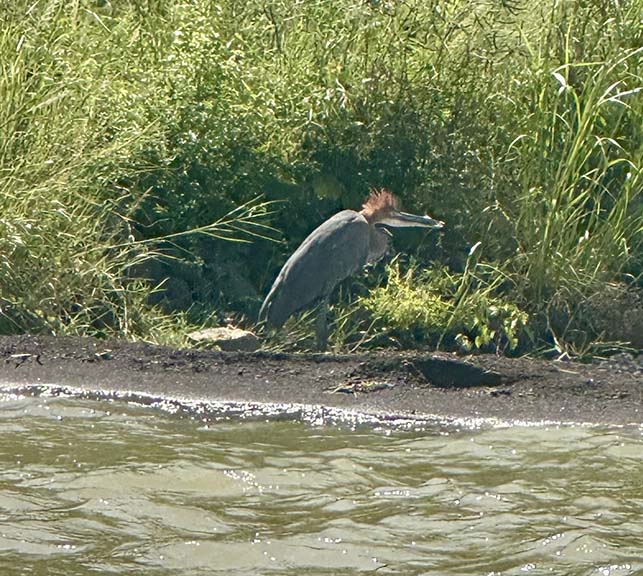
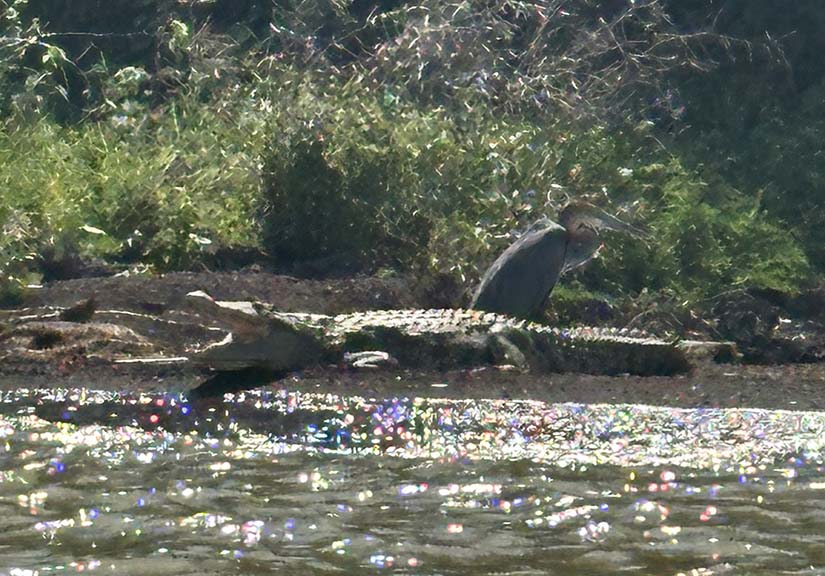
Then Arba Minch and a boat ride on Lake Chamo. A fish eagle, caribou stork, and crocodiles.
|
|
|

|
|
|
Next is Konso Cultural Landscape World Heritage Site. A traditional village marked by concentric stone walls built over the generations for defensive purposes. Never mind that people around the world have been building walls for thousands of years – when Africans succeed in piling up some stones it is deemed an achievement worthy of global recognition.
|
|
|
|
|
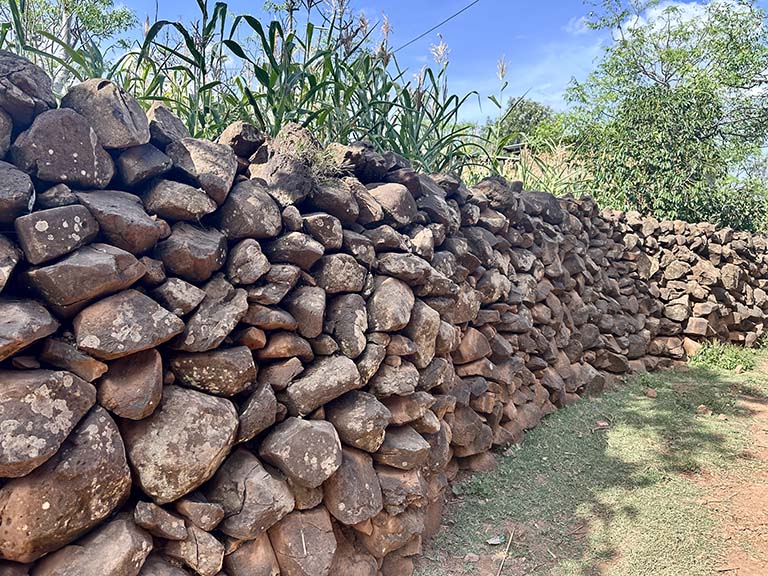

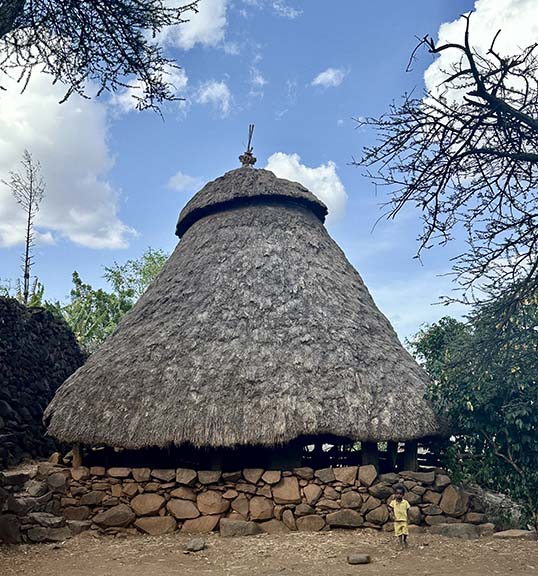
Aside from the heaped-up rocks, it's a typical African village
|
|
|
|
|
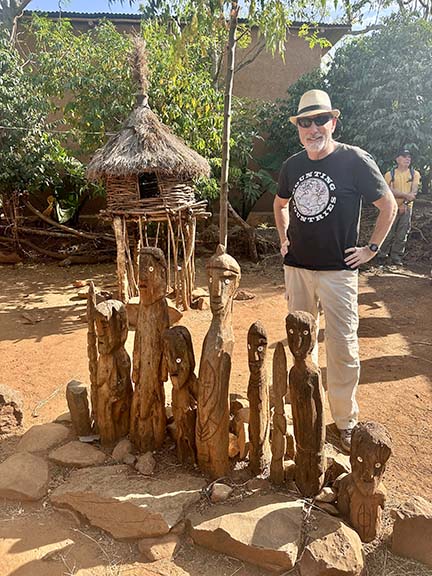

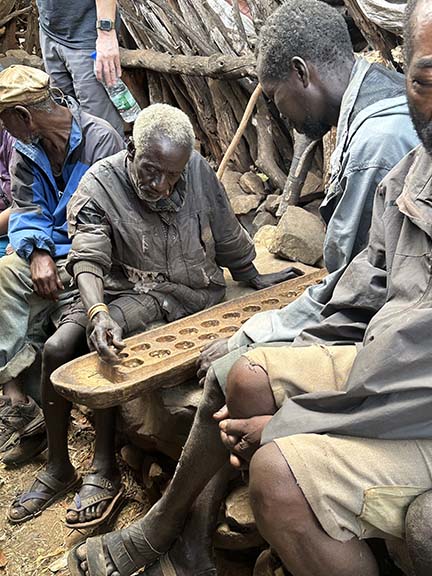
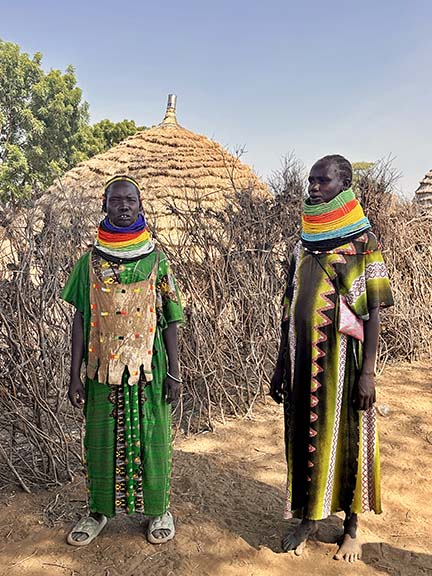
The highlight of the trip is a visit to the Omo Valley, a/k/a The Human Zoo. It is home to a dozen or so tribes with very distinctive customs and appearances. These days, they make their living posing for and selling souvenirs to tourists – you may consider that demeaning, but it is a considerable improvement over their previous hardscrabble, precarious existance.
First, the Nyangato, which means “elephant eaters.” But they done et all elephants, so these days they are herders. Among other tidbits, we are informed that the brideprice of a maiden from within the tribe will set you back one hundred head of cattle, but a less-desirable outsider will only cost you twenty.
|
|
|
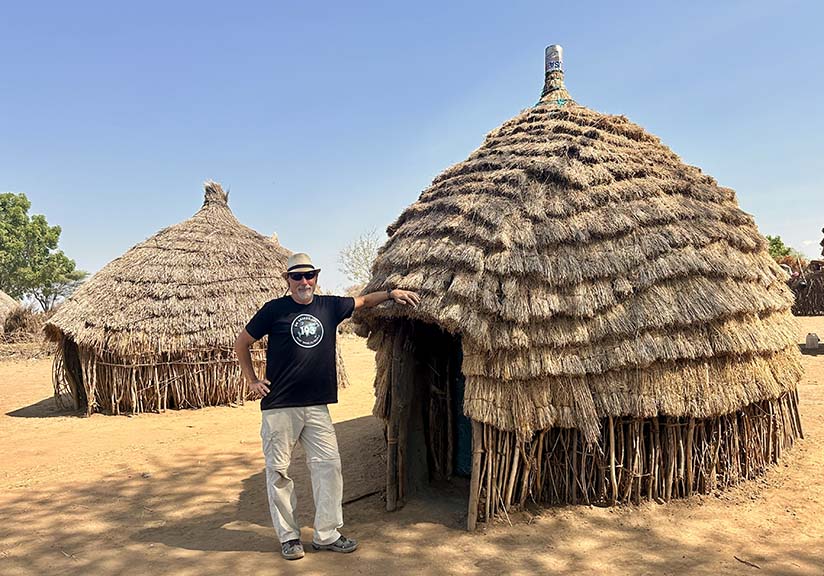
Then the Karo, a tribe noted for their scarification and body painting.
|
|
|
|
|
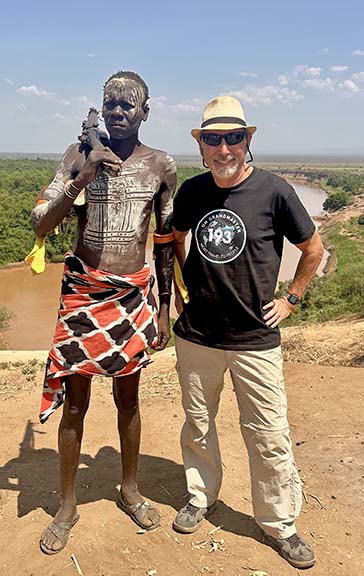
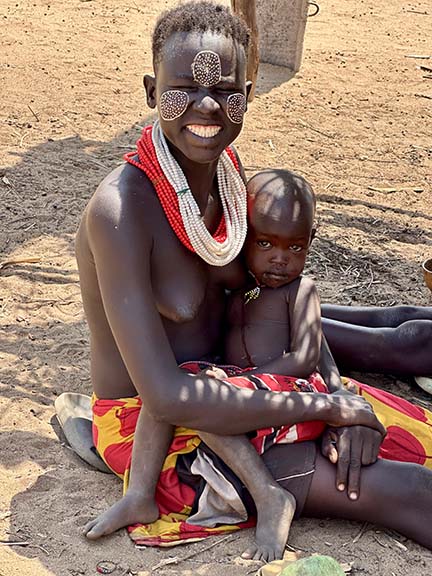

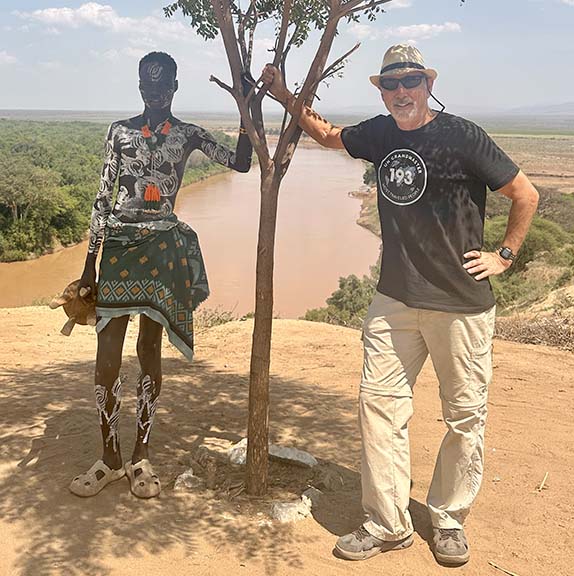
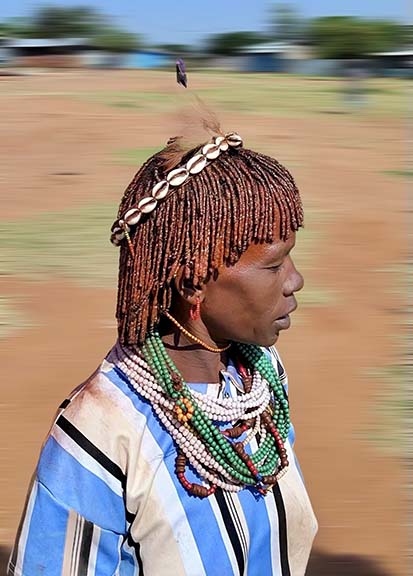
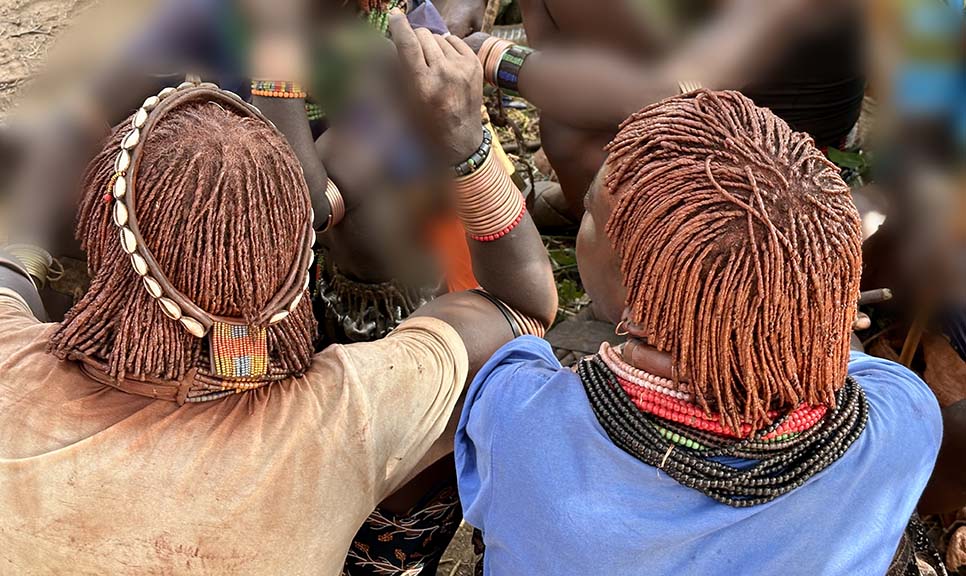
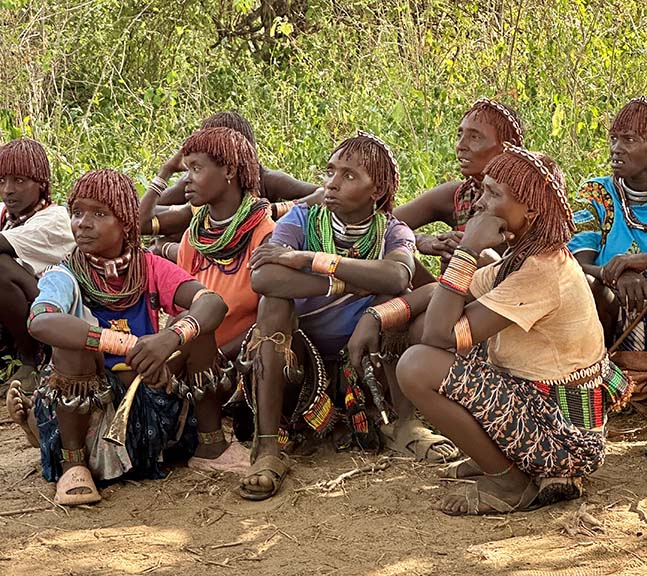
The area is called Hamerland. Hamer women have a distinctive hairstyle done with butter and clay.
|
|
|
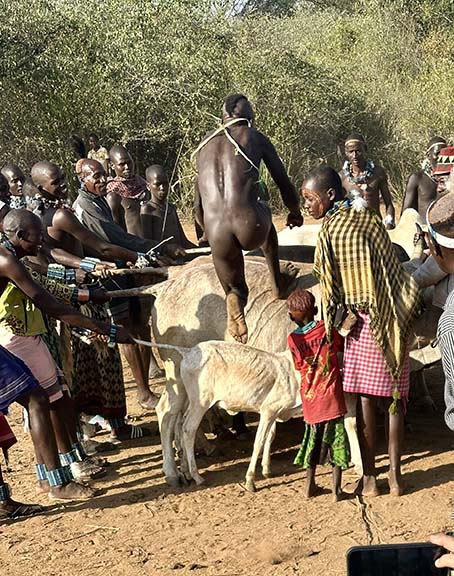
We are fortunate enough to encounter a Hamer bull-jumping ceremony, marking a bridegroom’s initiation.
|
|
|
Finally, the Mursa.
|
|
|
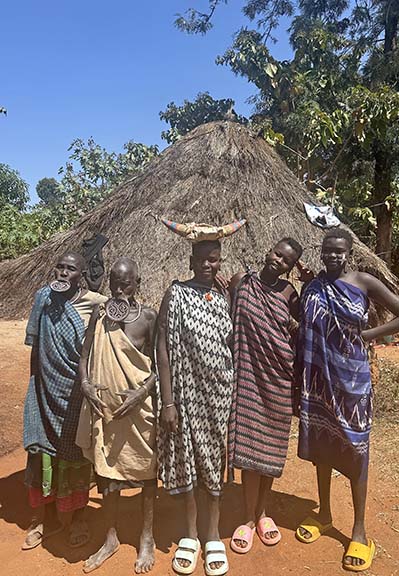
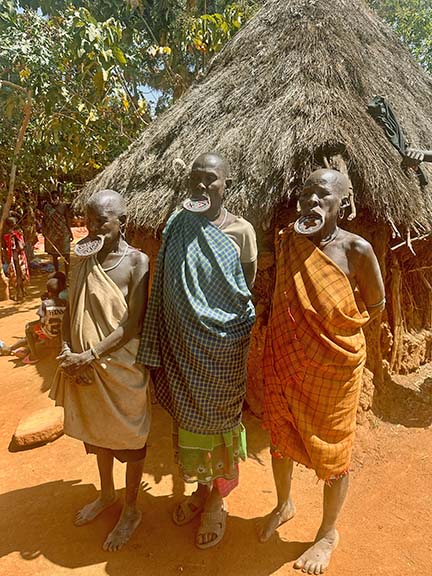
The lip plates originated as a means of making the women unattractive and undesirable to slave raiders. Later, it became a tribal tradition, but one that is dying out.
|
|
|
|
|
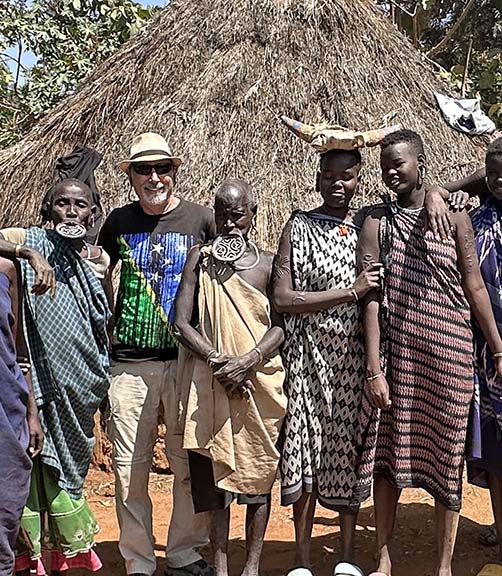
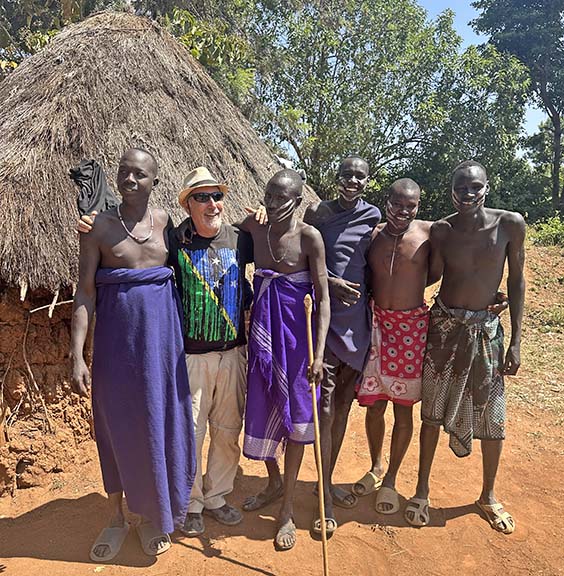
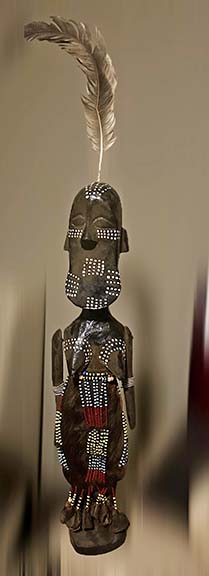
We were supposed to end the trip in Jinka, but all flights have been cancelled: not only are the planes needed to bring in medical teams to fight the Marburg Virus outbreak, the last thing they want is for infectious passengers entering the capital. So, its another long drive back to Arba Minch for our return flight.
Back in Addis for a city tour and a visit to our ancestors.
|
|
|
|
|
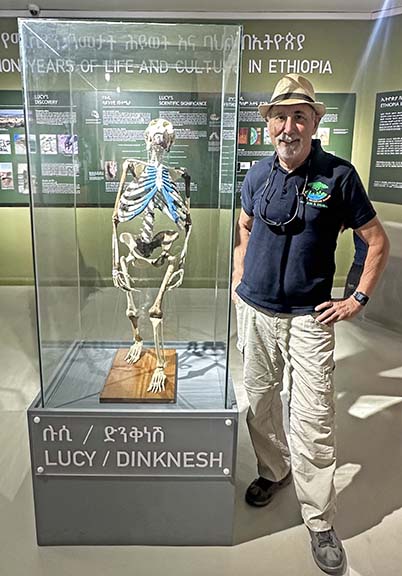

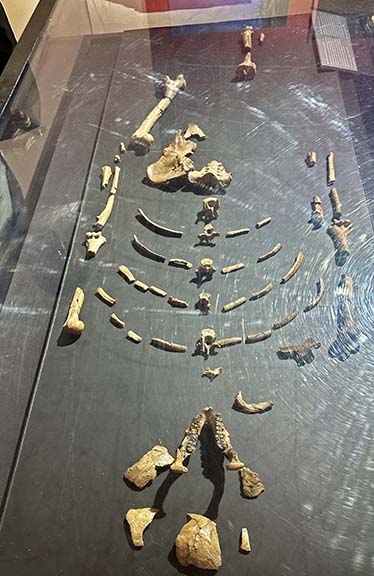
My next post-conference trip is to the Afar region in the extreme north of the country. This is where Lucy lived – the area was once verdant but due to climate change it is now a desert. (Must have been the SUV she drove). Within it, the Danakil depression is part of the Great Africa Rift and one of the lowest places on earth. Its arid, sunblasted volcanic landscape is a literal hell on earth.
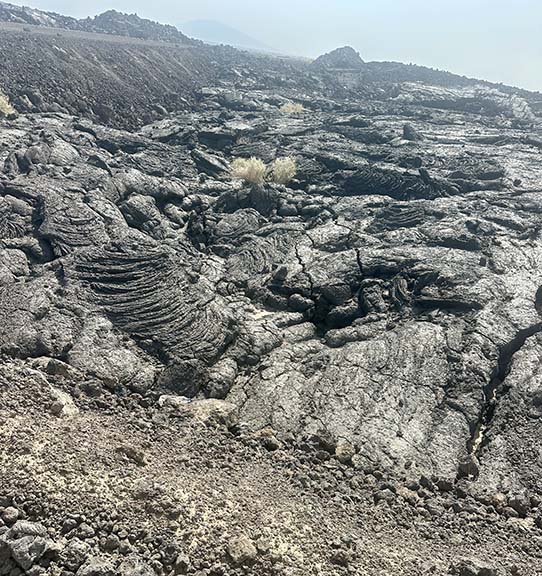
The day prior to my arrival a volcano erupted after 12,000 years of dormancy, the ash plume disrupting aviation as far away as India. Up close, near the base, there is no fire in the sky; it just looks like clouds. Its famed lava lake is no longer visible.
There is no accommodation other than a rude ash-covered campsite. No tents. The desolate locale also means no light pollution to impair the view of the night sky. Our guide has promised a “thousand star hotel” which he delivers – the Milky Way above.
The “road” is an unmarked path through hardened lava flows.
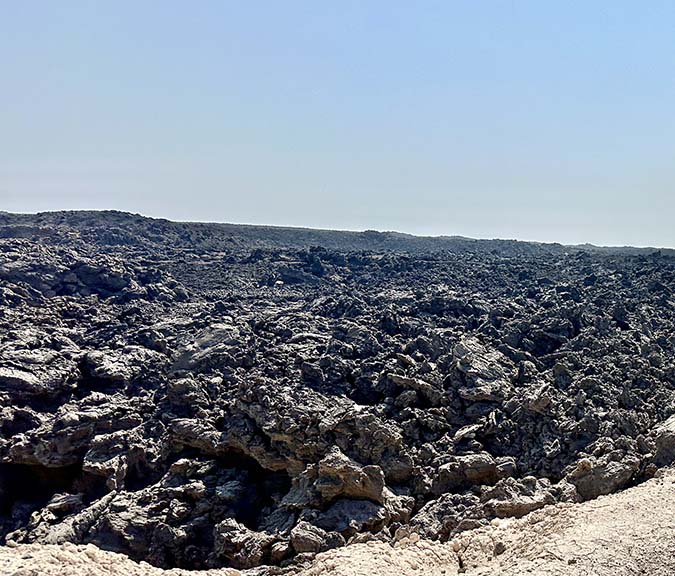
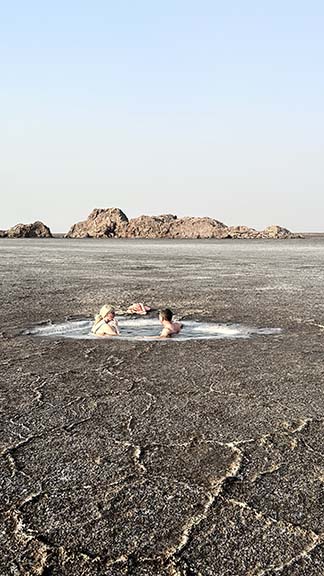
We continue to Lake Assal. Despite being one of the most inhospitable regions on earth, people live here, making a living (of sorts) collecting salt which they transport to market on camel caravans.
|
|
|
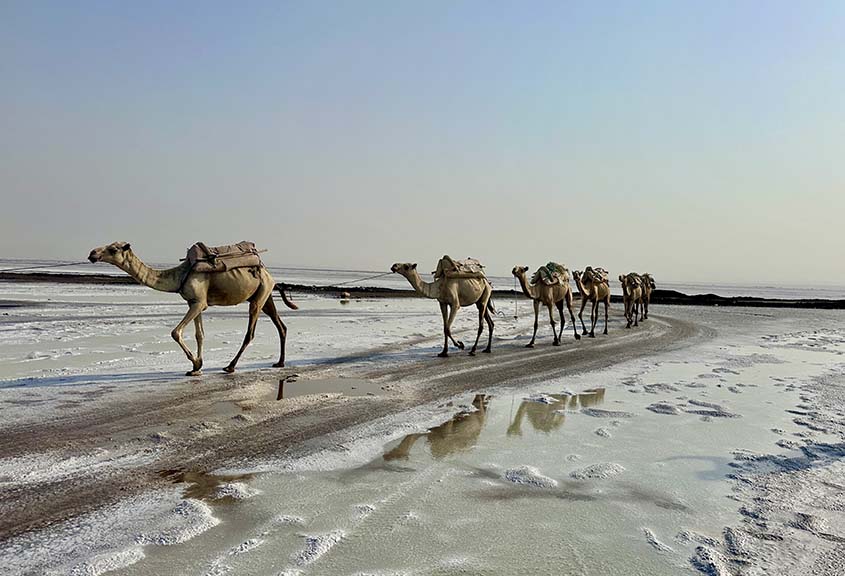
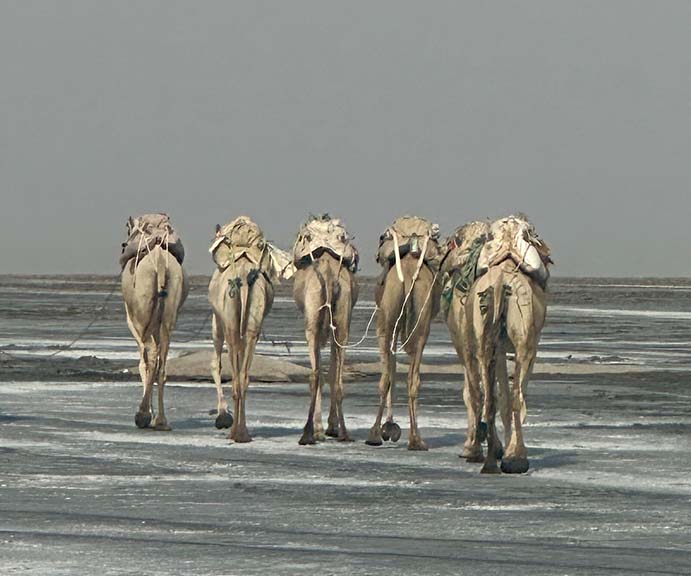
Salt flats and ultra briny natural pools.
|
|
|
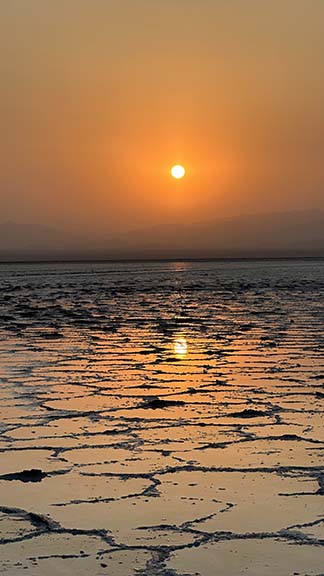
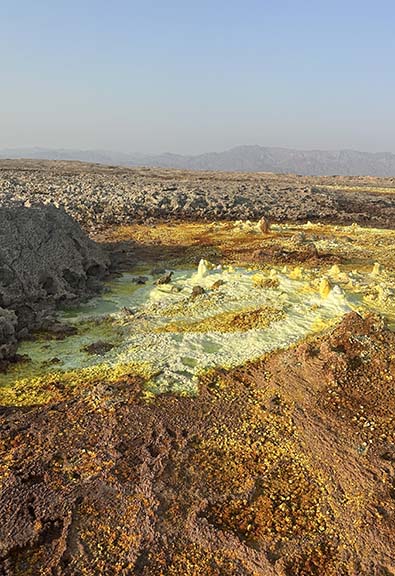
The active volcanic area is an ever-changing display of sulphur outflows.
|
|
|
|
|
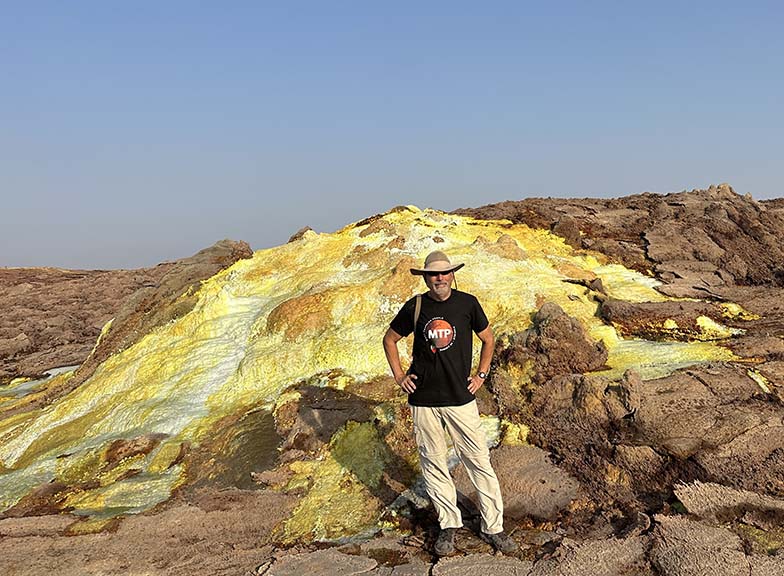
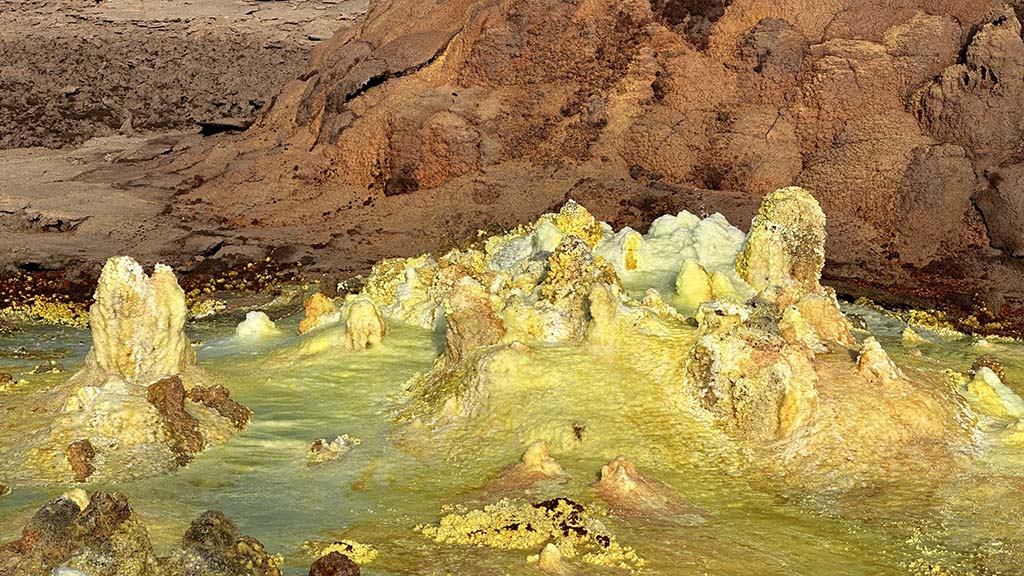
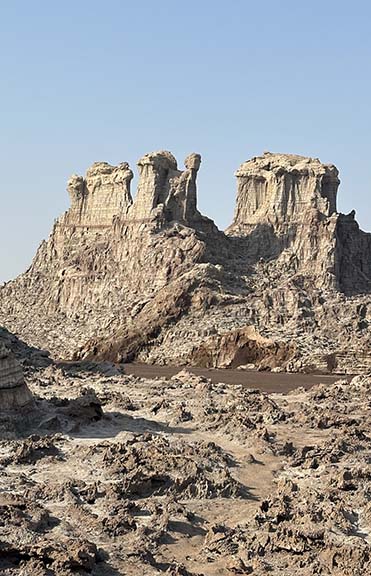
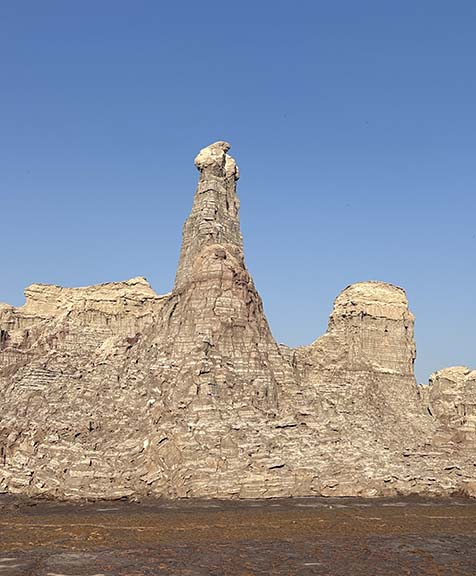
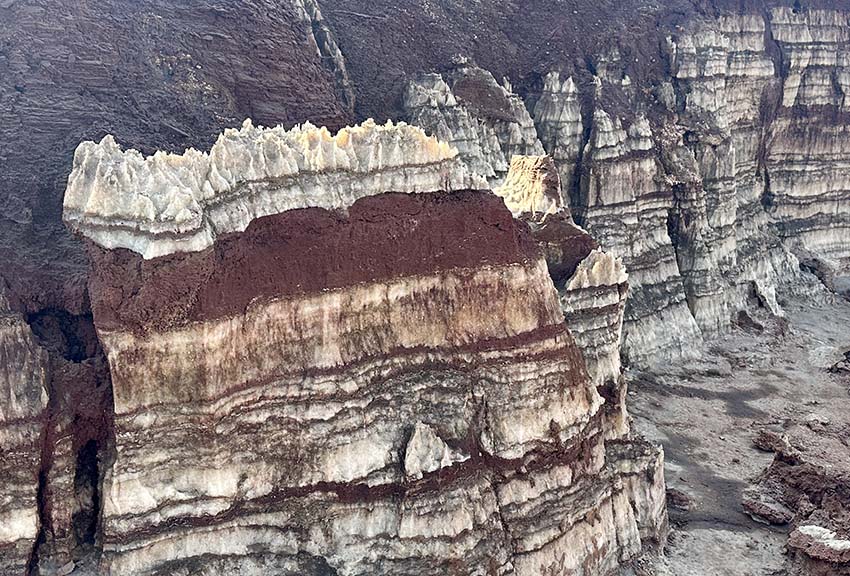
And nearby, tectonic uplift and wind erosion have created formations reminiscent of the American west.
|
|
|
|
|
That's it. A return flight to Addis, a quick shower to remove the grime of three days of dust and 100 degrees temperatures, thence back to Florida.
Trip date: November 2025